News & Resources
Solar around the world

California “Drying” – Solar Canals come to its aid!
Writer: H M Remi
It seems that the climate always changes faster than technology development. In the past, people were unaware of the importance of protecting the environment. Now, we can only catch up by mending our mistakes for everyone’s future. Scholars from University of California are part of the force at the frontier to save our planet.
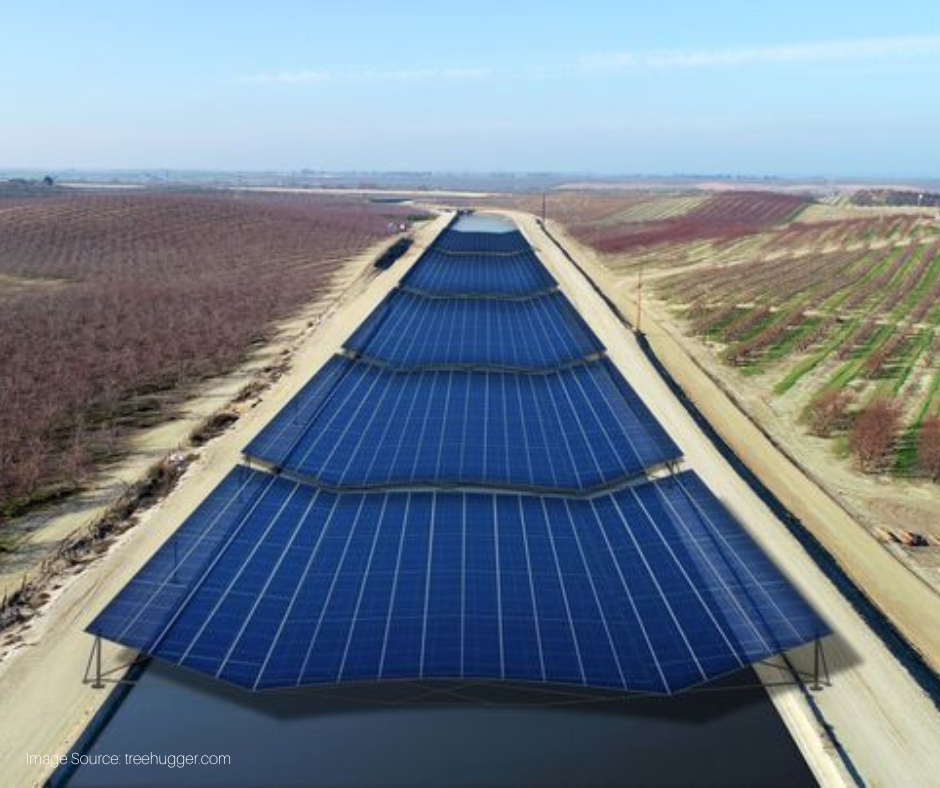
In 2021, University of California initiated Project Nexus. It is a huge engineering project with the participation of academia, government and private enterprises. The idea is to install solar panels to cover all the water canals in California to generate electricity and save freshwater sources.
Typically, the canals would lose 1% to 2% of the water from evaporation when circulating across the state. Yet, this amount of water loss would not cause any freshwater supply problems. However, California is under an even-worsening severe drought due to climate change: there was not enough snowpack from the winter in 2021. Moreover, California recorded the lowest rainfall in 100 years during the first two months of 2022. In March of the same year, the government already forecasted that California would face a water shortage in the coming few months. In fact, 87% of the state’s land is drying up now.
There are a total of 4,000 miles of canals in California. By covering them with “solar canopies”, California could save 63 billion gallons of freshwater each year. It will be enough to supply 50,000 acres of farmland and 2 million people annually. At the same time, the solar canopies can generate 13 gigawatts of green power, equivalent to approximately 17% of California’s existing solar capacity. They will help the state achieve its goal of supplying 100% electricity from renewable energy by 2045.
The researchers expressed that the solar-canal idea can provide more benefits. For example, the water flowing underneath can cool down the solar panels on the canals. If they promote the technology abroad, say in India, a country which always needs to deal with the trouble of aquatic weeds in its canals: the shades of the canopies could prevent aquatic weeds from existing, and the regular clean works would be no longer needed. Solar canals will also have fewer environmental footprints because they will be built on developed lands instead of unspoiled areas.
Project Nexus Phase I construction is expected to be completed by the end of 2023. Solar canals would need steel cables or trusses to support their structure, thus making the installation more expensive than the traditional photovoltaic systems. However, the researchers believe the extra costs would be compensated by the additional benefits the solar canals could create.
Source:
https://www.treehugger.com/california-solar-canals-save-water-produce-clean-energy-5222409
Image source:
https://www.treehugger.com/california-solar-canals-save-water-produce-clean-energy-5222409
.png)