News & Resources
Solar around the world

Snow Helps Solar Panels Thrive in Winter
Writer: H M Remi
We never have to worry about the troubles of snowfalls in Hong Kong, not on the road, not on the roof, not on your solar panels.
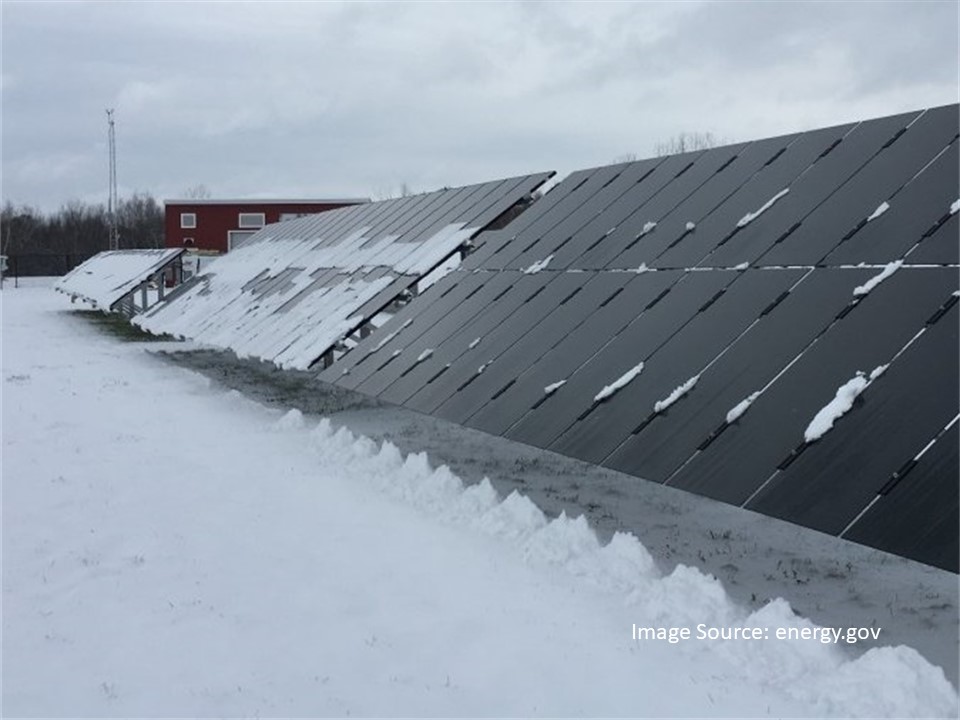
However, heavy snowfall has been a headache to many people living in cold areas around the globe who are taking care of solar panels. They worry about the stress placed on the PV system structure from the weight of snow. Also, being blocked by the snow, less sunlight could reach the panels, thus reducing electricity generation. Fortunately, engineers have solved these problems with a well-designed frame that allows the snow to slide down the solar panels. When the snow slides down the panels, it simultaneously clean the dirt on the panels, raising the solar system’s efficiency.
Not bad, right? Snowfall seems not to be a trouble anymore for the solar panels. Instead, snow could actually act as a helper to the PV system. Recently, scientists from the University of California discovered that snow could be a power source.
In order to know how snow generates power with solar panels, we need to learn about triboelectricity.
When we take off a nylon jumper, our hair would stand on end. Or when you shake somebody’s hand, you may sometimes feel a sudden and noticeable electrical discharge. It is the static electricity generated by the triboelectric effect. It happens when a material transfers the electrons to another. And this is the physical phenomenon the scientists harness to generate electricity from snowfall.
Since the snow has a positive charge, all we need is a material with a negative charge. Silicone is a good choice because it could form an electrical current with snow. The American scientists have finished a technology prototype of a 3D-printed silicone layer with an electrode to capture the charge. Thanks to the low production cost of silicone, this design allows mass industrial production.
By covering the solar panels with this translucent silicone layer, snow will no longer block sunlight from reaching the PV cells, but it delivers triboelectricity in addition to solar power.
This technology could also be applied to wearable devices which detect physical activities such as boots and skis.
Now we know that snow is unique not only because of the crystalline structure of snowflakes, but its power could also be obtained from these tiny, fluffy and chilling particles.
Reference:
https://www.imnovation-hub.com/energy/let-snow-electricity/
Image source:
https://www.energy.gov
.png)