Stories of Our Partners
< Back

No 30 Nam Long Shan Road, Wong Chuk Hang, Aberdeen, Hong Kong

2024-09-05

Rooftops of the Main Block, Ward Block and Rehabilitation Block

212 m² (2,281.95sq ft.)

Flat rooftop and sloping roofs

102pcs

Monocrystalline silicon

61.48 kWp

46,471 kWh
The Hong Kong Anti-Cancer Society (HKACS) was established in 1963, a non-profit making organisation. It has always been at the forefront of fighting against cancer and is committed to serving the people of Hong Kong. In addition to providing quality medical services to cancer patients, HKACS also organises various activities to raise awareness of cancer, conduct cancer education, support cancer research, establish guidelines for cancer detection and prevention, and provide direct financial support for cancer patients in need. Their dedicated volunteers also conduct regular home visits and organise recreational activities with love and care.
The Hong Kong Anti-Cancer Society Jockey Club Cancer Rehabilitation Centre (JCCRC) was funded by The Hong Kong Jockey Club Charities Trust for conversion works, and is operated on a self-financed but non-profit-making basis. JCCRC provides high-quality private nursing home services for cancer patients, people with chronic illnesses and the elderly.
A total of 102 solar photovoltaic(PV) panels were installed on the rooftops of the Main Block, Ward Block and Rehabilitation Block, with a system capacity of 61.48 kWp. The power generation in the first year is46,4714 kWh.
Information Source: Hong Kong Anti-Cancer Society Jockey Club Cancer Rehabilitation Centre (JCCRC)
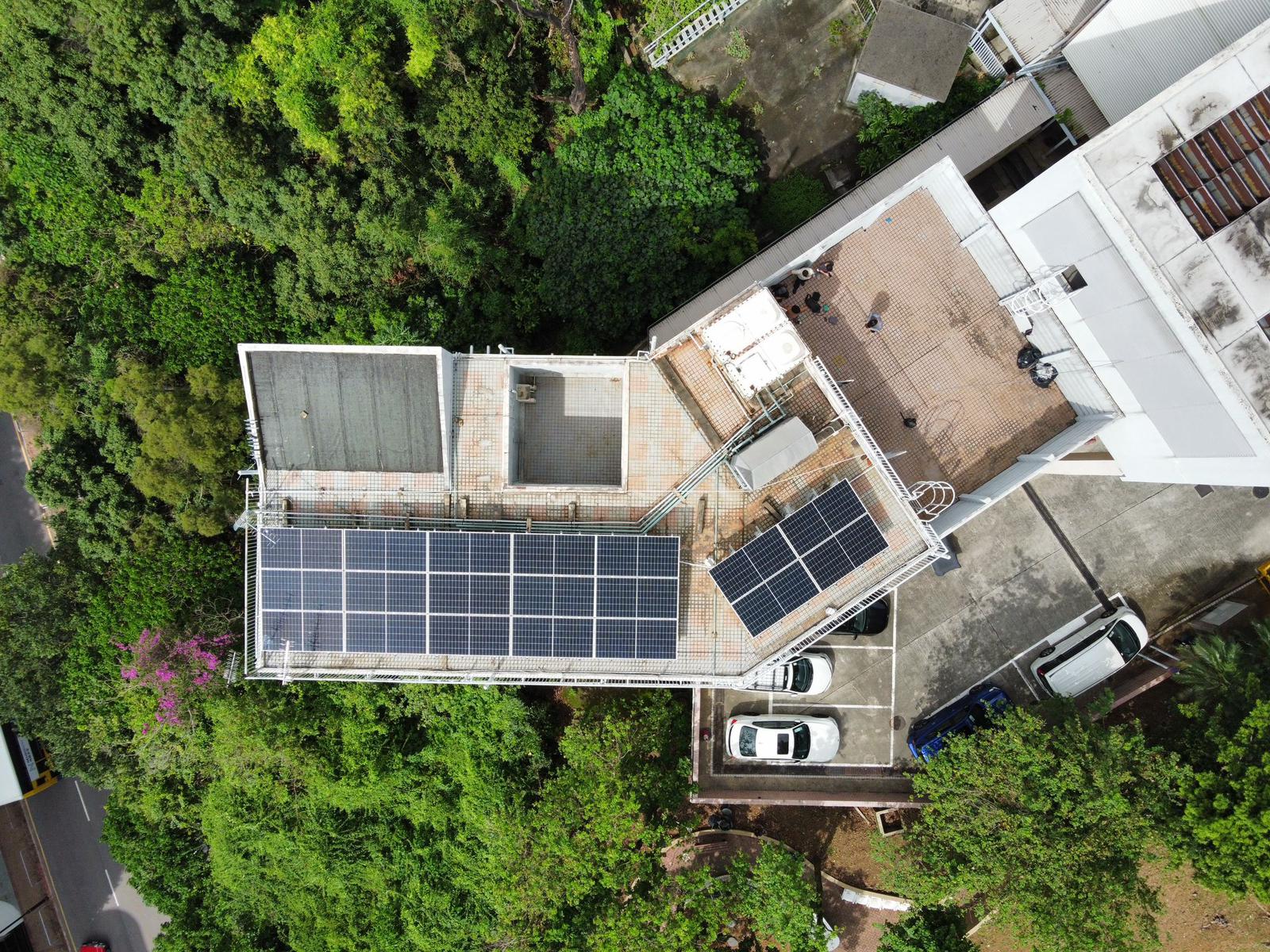
The solar panels are installed on the frames on the rooftop, and they won’t increase the burden of the rooftop.
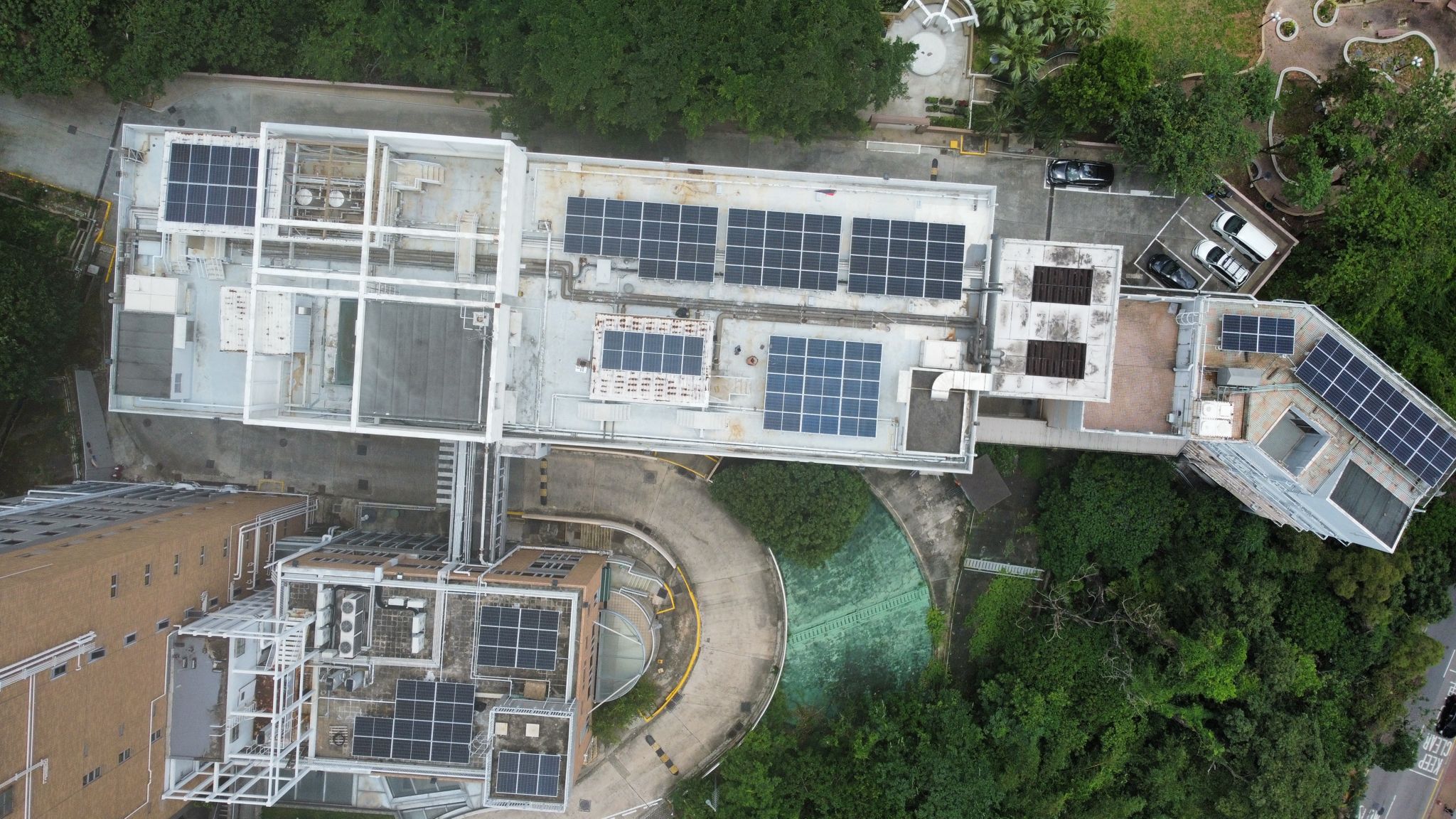
The solar panels were installed on frame structures.
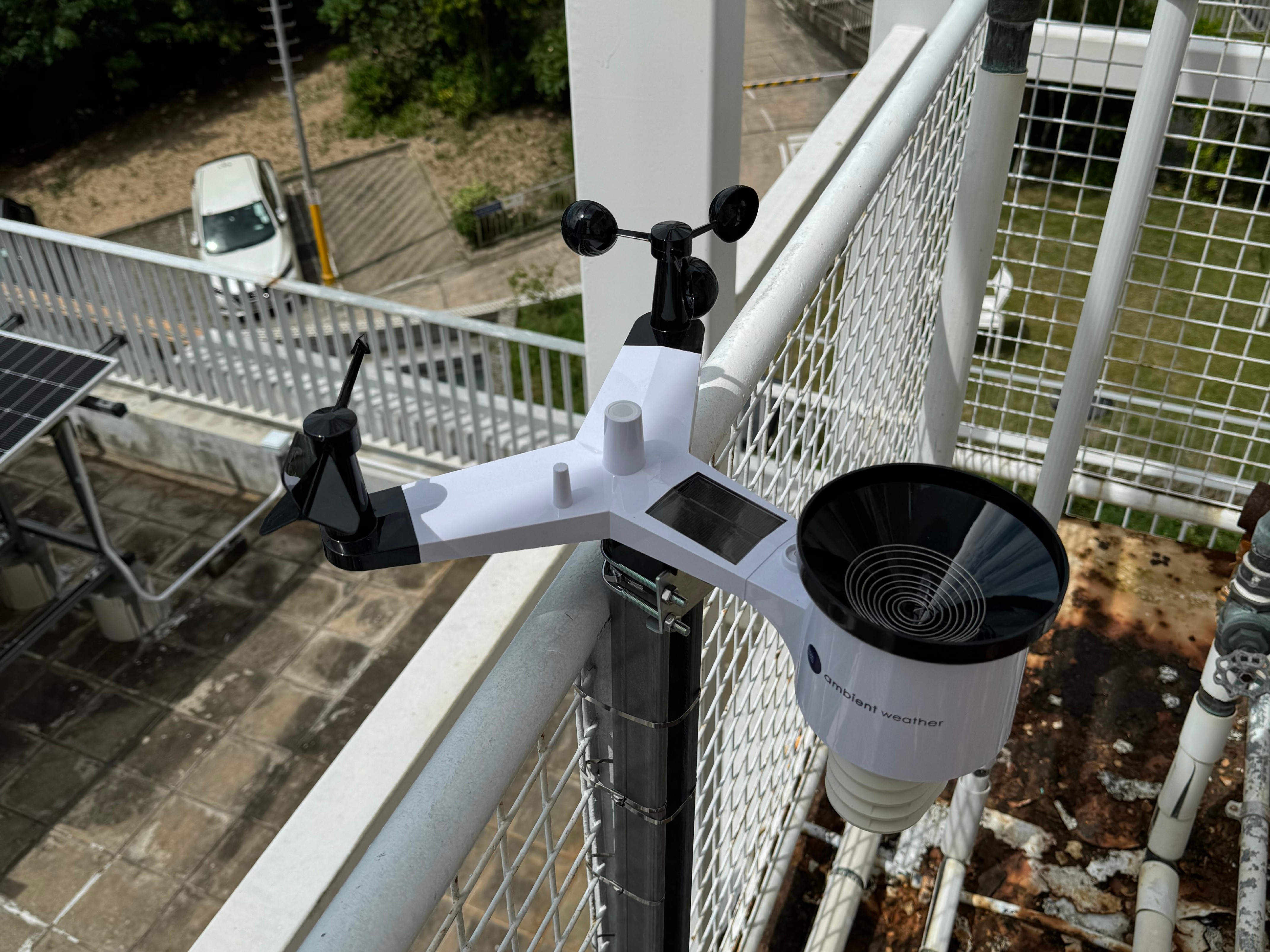
The weather station shown in the figure collects irradiance and ambient temperature data, which allows engineers to examine the performance of the system from the detected data. It could also be used for taking preventive measures, monitoring potential risks and making timely corrections to the system if necessary.
.png)